“8 lifers, chiggers, and bear……oh my!”

Three days in the Santa Rita mountains south of Tucson, Arizona produced EIGHT lifers! Without the enthusiastic, expert guidance of local birding professional Brian Gibbons, my trip would have been a bust. Brian and I hiked miles and miles of canyon trails…at elevations greater than 5,000 feet, in pursuit of rarities that only frequent North America by way of southern Arizona, in the summer. These specialties are basically Mexican birds.

Sulphur-bellied Flycatcher (Madera Canyon, Arizona)

Sulphur-bellied Flycatcher (Madera Canyon)


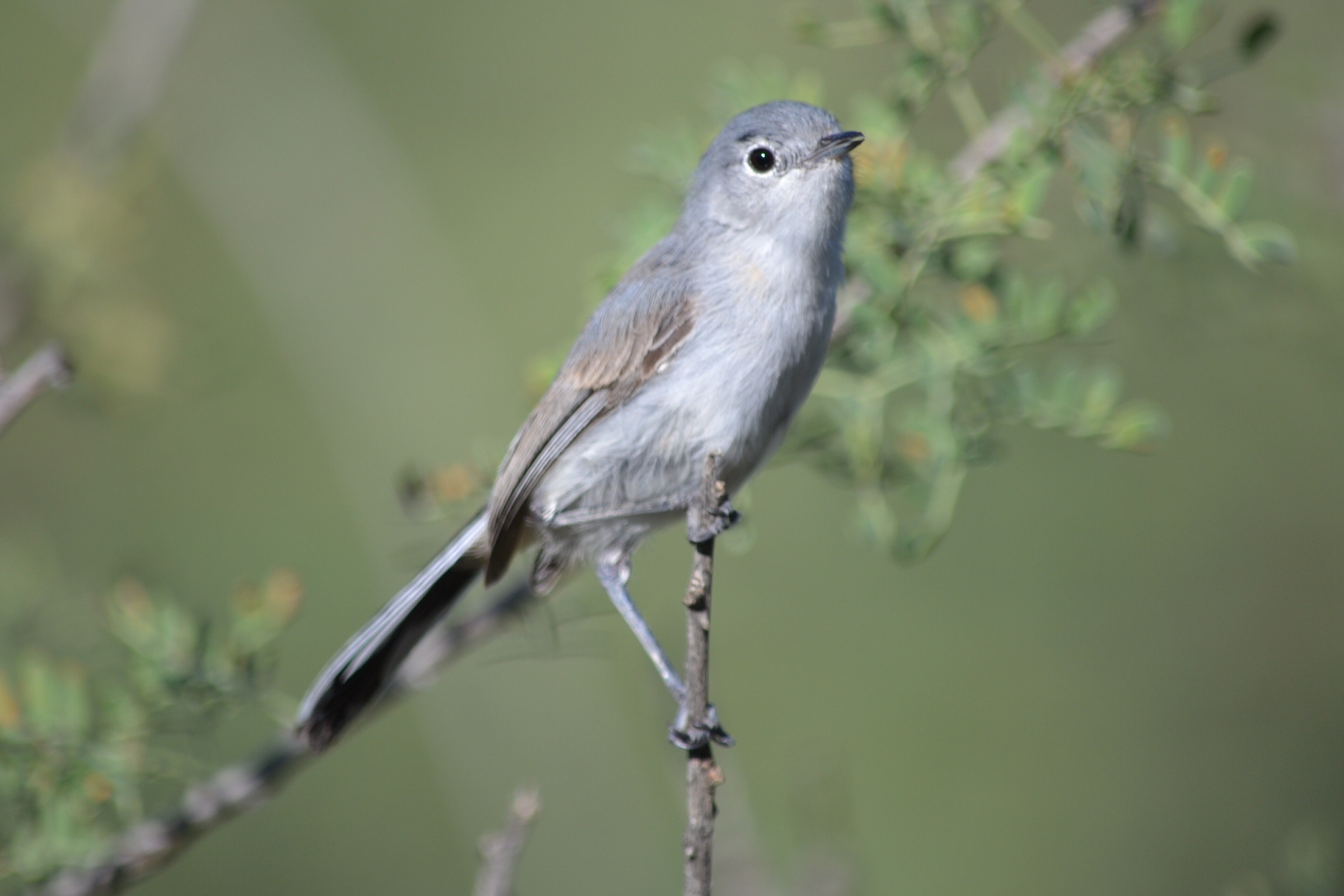
Black-capped Gnatcatcher (female in Montosa Canyon)

Black-capped Gnatcatcher (female in Montosa Canyon)


White-eared Hummingbird (Miller's Canyon, Arizona)

White-eared Hummingbird (Miller’s Canyon)


Violet-crowned Hummingbird (Patagonia, Arizona)

Violet-crowned Hummingbird (Patagonia, Arizona)


We were not the only birders on the trail up Miller’s Canyon in search of the White-eared Hummingbird. About a mile up the very steep slope I recognized 82 year old Sandy Komito….the guy who holds “The Big Year” record; you know…the character portrayed by Owen Wilson in the not-so-famous 2011 movie of the same name. We talked briefly and I gave him my business card. I’ll let you know if he chooses to correspond with me.

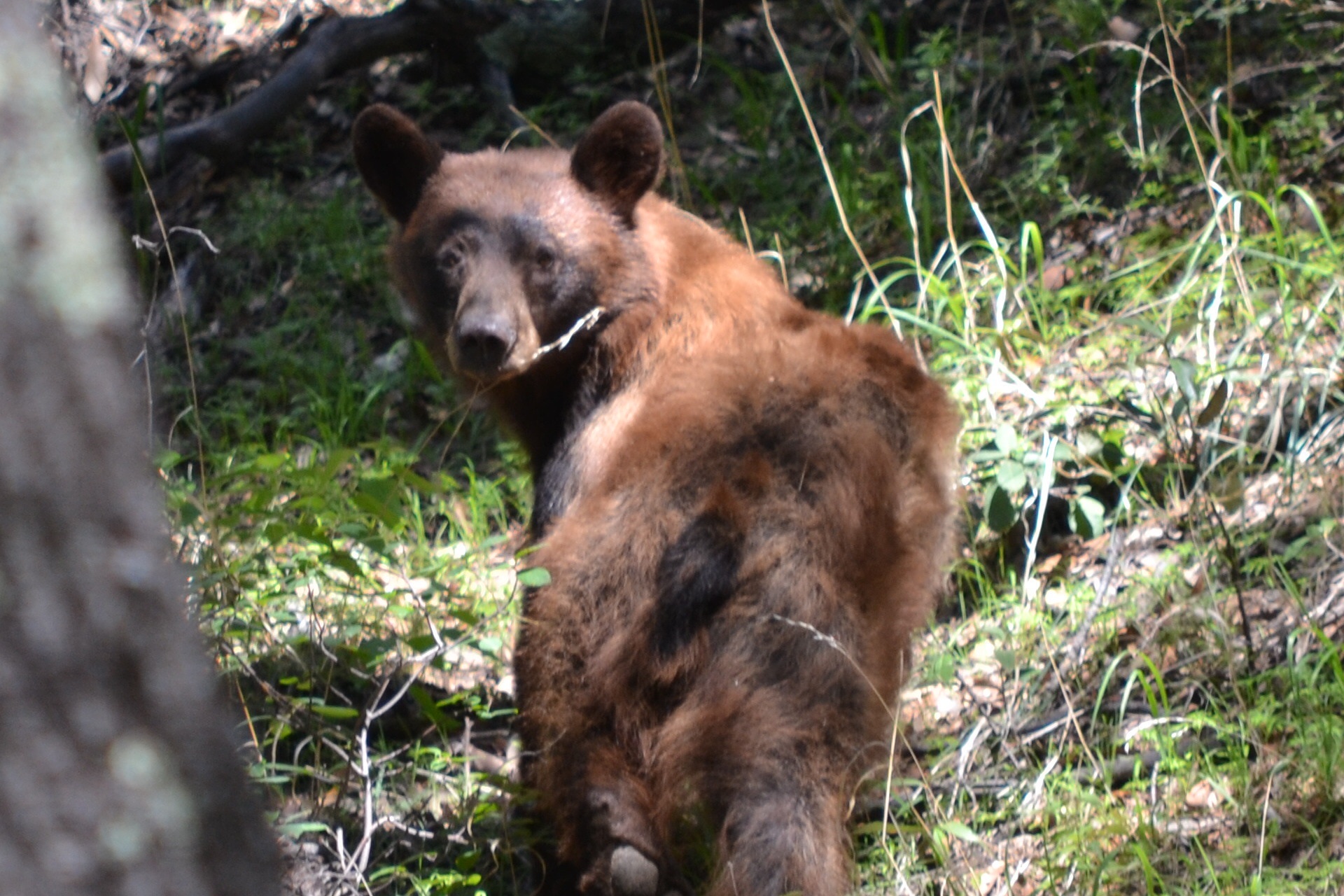
As I write this post in the Phoenix airport waiting for my red-eye flight to Philly, I am distracted by the incredibly itchy welts around my waist caused by chiggers. I have no idea how I hosted these microbes…but I blame the bear we encountered yesterday. His sudden appearance on our hike up Madera Canyon dropped me in my tracks and left me sitting in some strange vegetation, as I attempted to take a memorable photograph.

A brown Black bear in Madera Canyon

A brown, Black Bear in Madera Canyon

Posted in Quest for 700 (*800!) | 18 Comments

California and back….but stuck at 669

A week in the San Francisco area served many purposes. Rekindling and making new friends, eating healthy foods like kale and soybeans, drinking healthy beers like Blue Moon, selling Haverford (of course!),…did I mention birding? Basically I had my binoculars around my neck the entire visit. It did not seem to bother my Haverford Alumns…not even the lawyers. My tolerant and generous hosts…the Horton’s, Simpson’s and Parish’s…may have even caught a bit of the birding fever I intentionally tried to pass on to them. By the time I was finished talking (at them?), they were locating great horned owls, distinguishing whimbrels from godwits….even cutting out newspaper articles about birds!

Michael Parish & GCW spying on White Pelicans

Michael Parish & GCW locating White Pelicans


Walks thru Golden Gate Park, hikes up Mt. Tam (twice) and exploring Pt. Reyes National Park produced many bird encounters but no “lifers”. A 12 hour day on the infamous Debra Shearwater’s Half Moon Bay pelagic voyage provided incredible cetacean sightings (Blue, Fin, and Humpback whales), but alas, the mega-rarity Cook’s Petrel must have forgot that it was supposed to leave New Zealand by now.
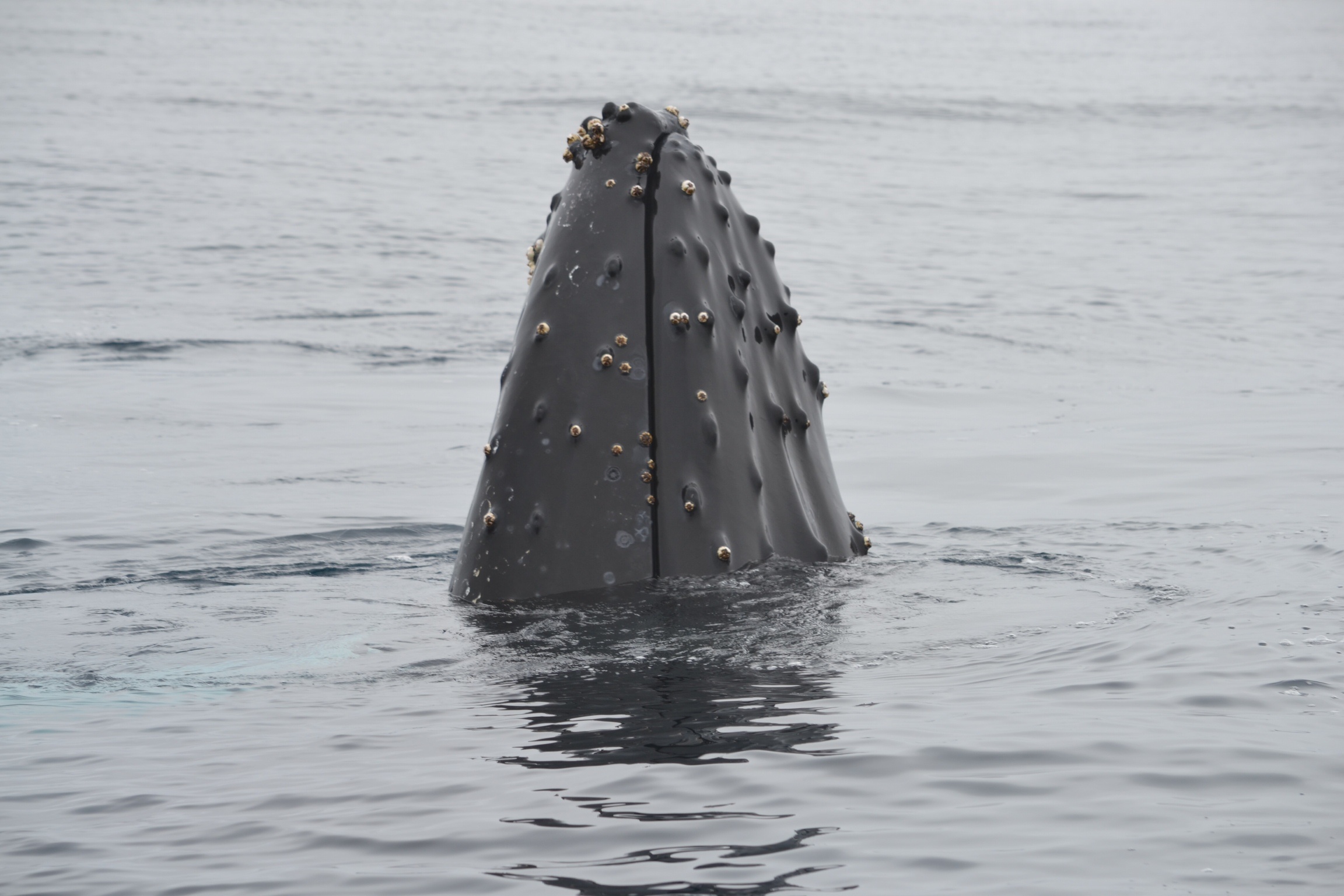
Humpback whale "spy hopping"

Humpback whale “spy hopping”


I spent most of my time at the stern of the boat befriending Ross, the 17 year old “chum guy”. His job was to systematically toss popcorn and drip smelly fish oil over the back of the boat in order to attract the birds. Fortunately, no seasick passengers interrupted our conversations about “seeing condors or chasing the rufous-necked wood rail”. Talking birds with Ross, a young birder extraordinaire headed to Cornell next month for a special “Young Birders Symposium”, was as enjoyable as watching Black-footed Albatrosses glide alongside our converted salmon fishing vessel; a multi-purpose boat specially licensed to dispose of cremated human remains (I saw the certificate), as well as ferry birders around the Pacific in search of anything avian.
Black-footed Albatross

Black-footed Albatross


The Philadelphia Phillies and SF Giants baseball teams are in a July slump with little prospect for improvement. My mini-slump should be snapped soon though. A Hatteras, NC two day pelagic trip, call it a double-header, is only two weeks away!

Posted in Quest for 700 (*800!) | 8 Comments

The Curllsville Strips – #669!

In order for me to reach the magical “700 Club” of North American species sightings, I knew I needed to have the Henslow’s Sparrow. Each new bird from this point on is going to be a struggle…not to mention potentially expen$ive. But the Henslow’s is a breeder in my home state. An uncommon bird with a declining population, the eastern most part of its breeding range is 325 miles west of Bryn Mawr….in the Curllsville strips, north of Pittsburgh. It might as well be in Ohio. The Curllsville strips site is an aging reclaimed strip mine grassland, privately owned but open to the birding public. Armed with a reliable report of multiple sightings there this week, I could not resist the temptation to go out there (early) this morning. Music from the 70’s, intermittently spiced with ESPN sports radio, entertained me along the rather long stretch of I-80.

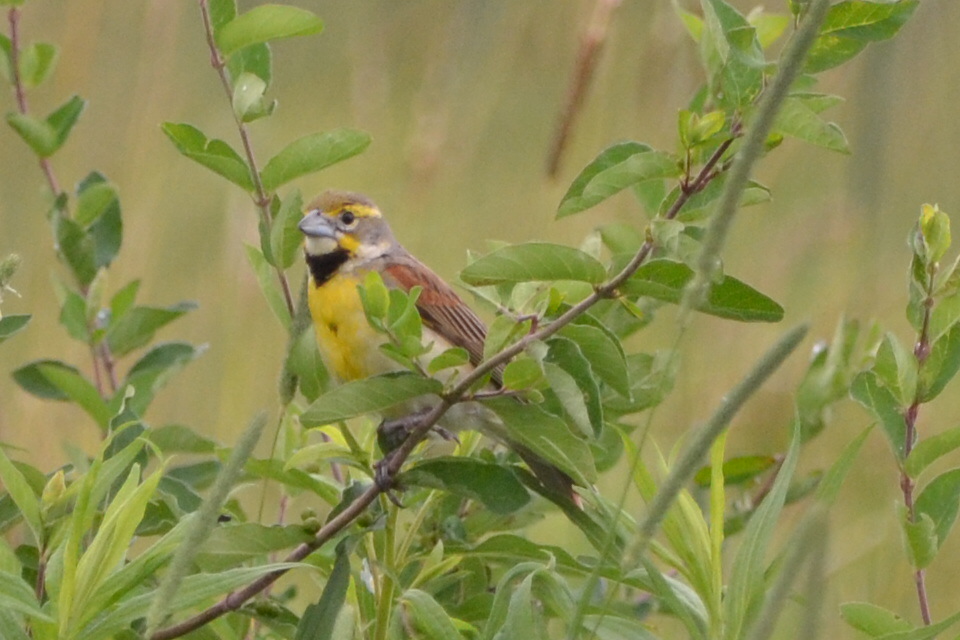
Within seconds of entering the strips site, I was greeted by a male Dickcissel…no shabby bird in its own right (I may have seen three in my lifetime), singing on territory.

Dickcissel

Dickcissel

Literally a minute later, as I drove slowly down the dirt road with all of the windows open,  I heard the distinctive “se-lick” song of the Henslow’s Sparrow in stereo…..no, it was more like SURROUND SOUND! Four or five of them were audible but hidden in the overgrown fields. And then good fortune struck. One brave male perched ten feet from my car!

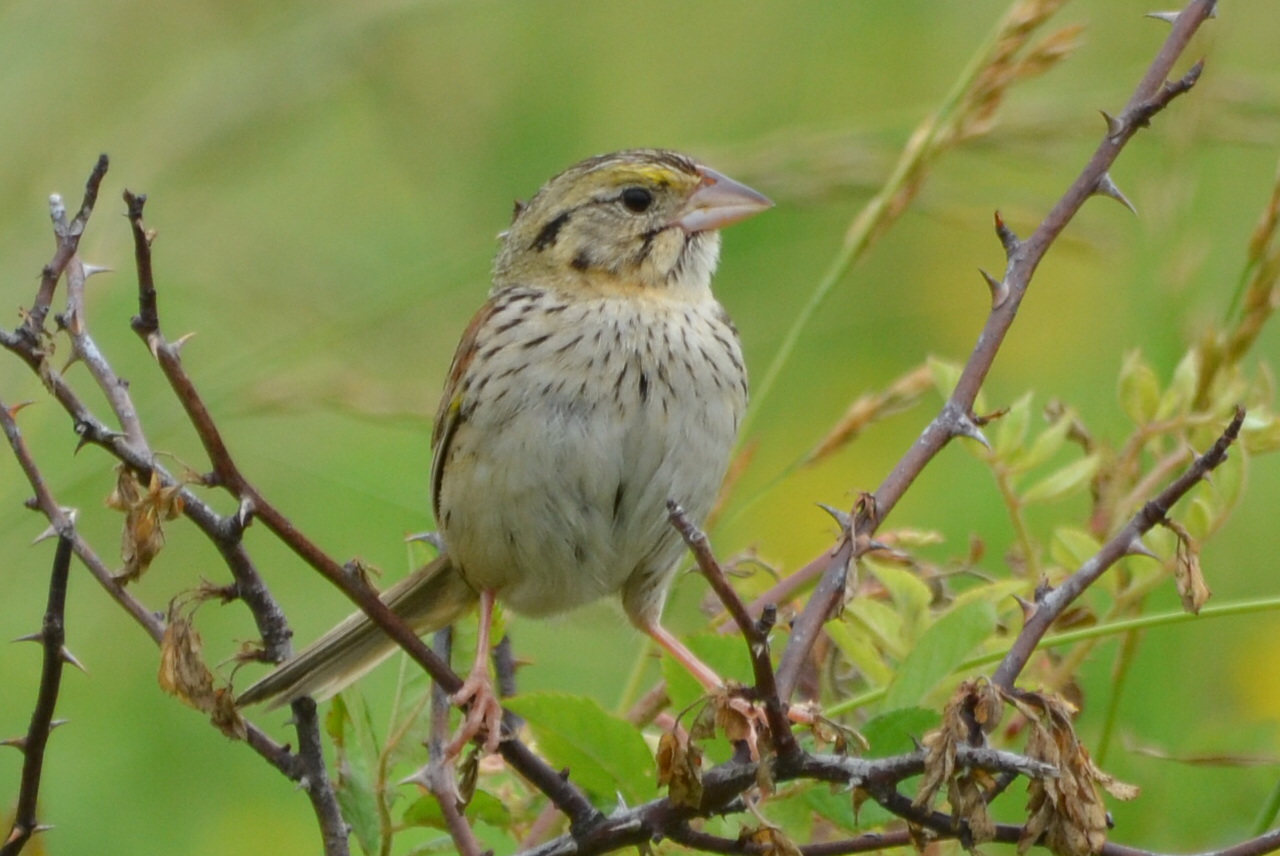
Henslow's Sparrow

Henslow’s Sparrow

Door to door I was gone only 12 hours, having driven…do I dare admit it? 650 miles…sorry carbon-counters…it WAS a selfish act on my part. But today my Dad would have turned 90…so I shamelessly claim Lifer #669 in his honor!

Posted in Quest for 700 (*800!) | 15 Comments

Nome & the Seward Peninsula, ALASKA

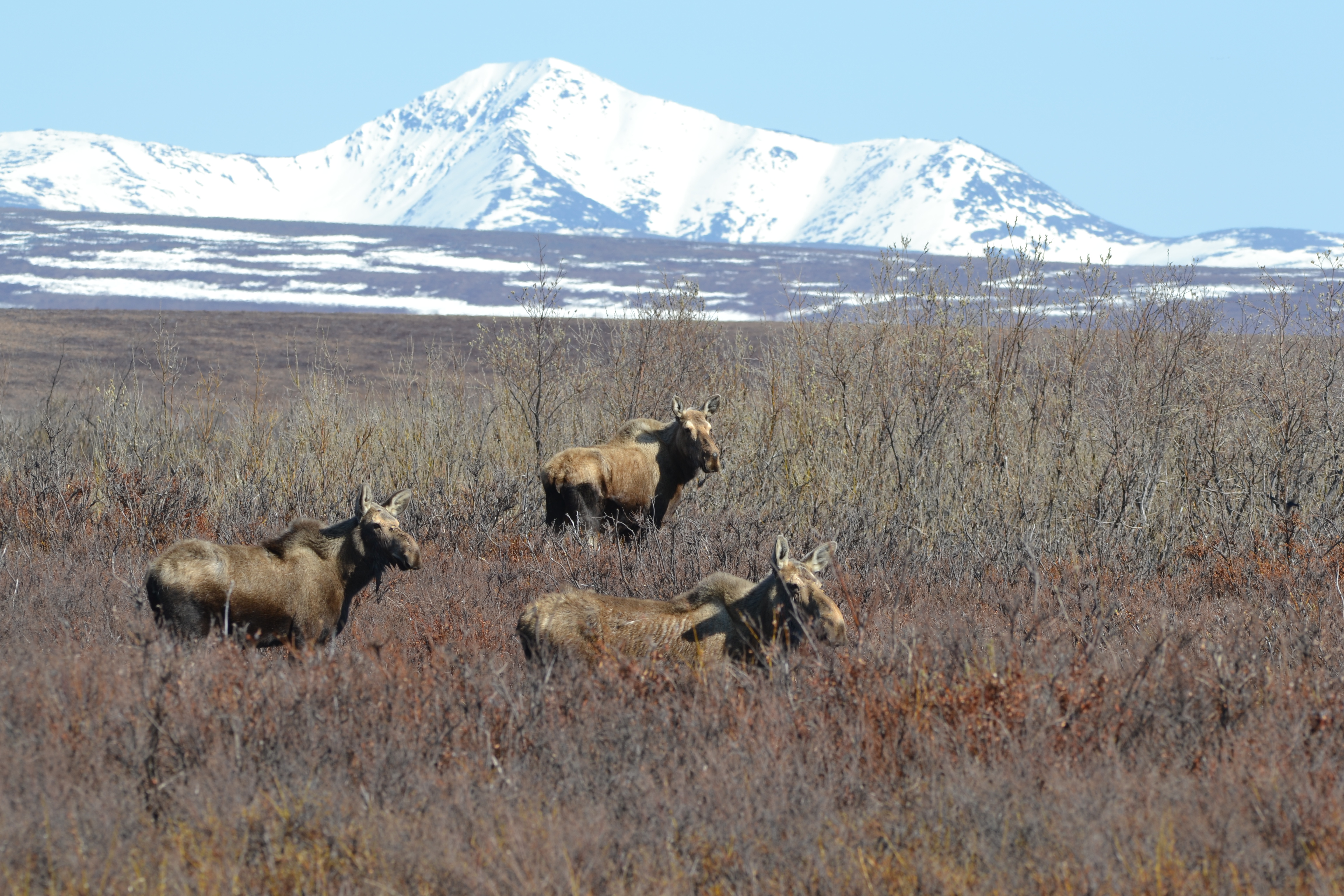
A birder cannot visit Gambell on St. Lawrence Island without visiting NOME, too! Better known as the end point of the annual legendary Idatarod “musher” race from Anchorage, it is also a fantastic birding destination. Accessible only by boat and airplane, Nome is bordered on the West and South by the Bering Sea, and the North and East by miles of trackless wilderness. Unfortunately for me, winter still held Nome and its surrounding waterways in its icy grip. That translated into very few opportunities to search for Aleutian Terns, Spectacled Eiders, or other water-favoring specialties I wanted to add to my life-list. However, a limited itinerary meant we had extra time to concentrate on the infamous 85 mile long Kougarok Road, which takes you into the high tundra and mountains of the Seward Peninsula.

Koukarag Road, Nome, Alaska

Kougarok Road, Nome, Alaska

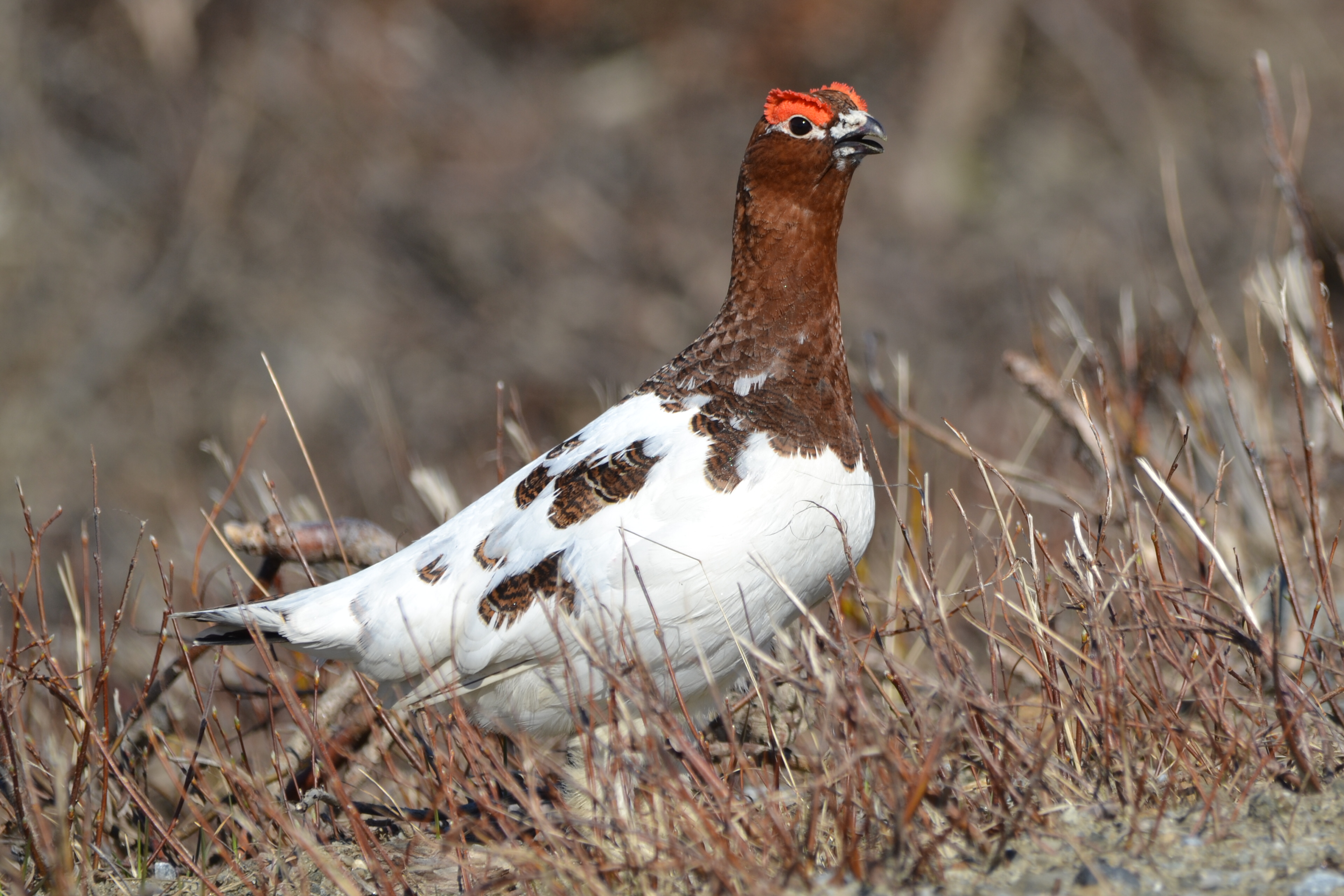
Kougarok Road is enchanting! It took us about one minute to sight lifer #666, a roadside Willow Ptarmigan in a transitional plumage.

Male molting into from winter white to summer brown coat (Koukarag Road, Nome, Alaska)

male Willow Ptarmigan molting from winter white to summer brown coat.

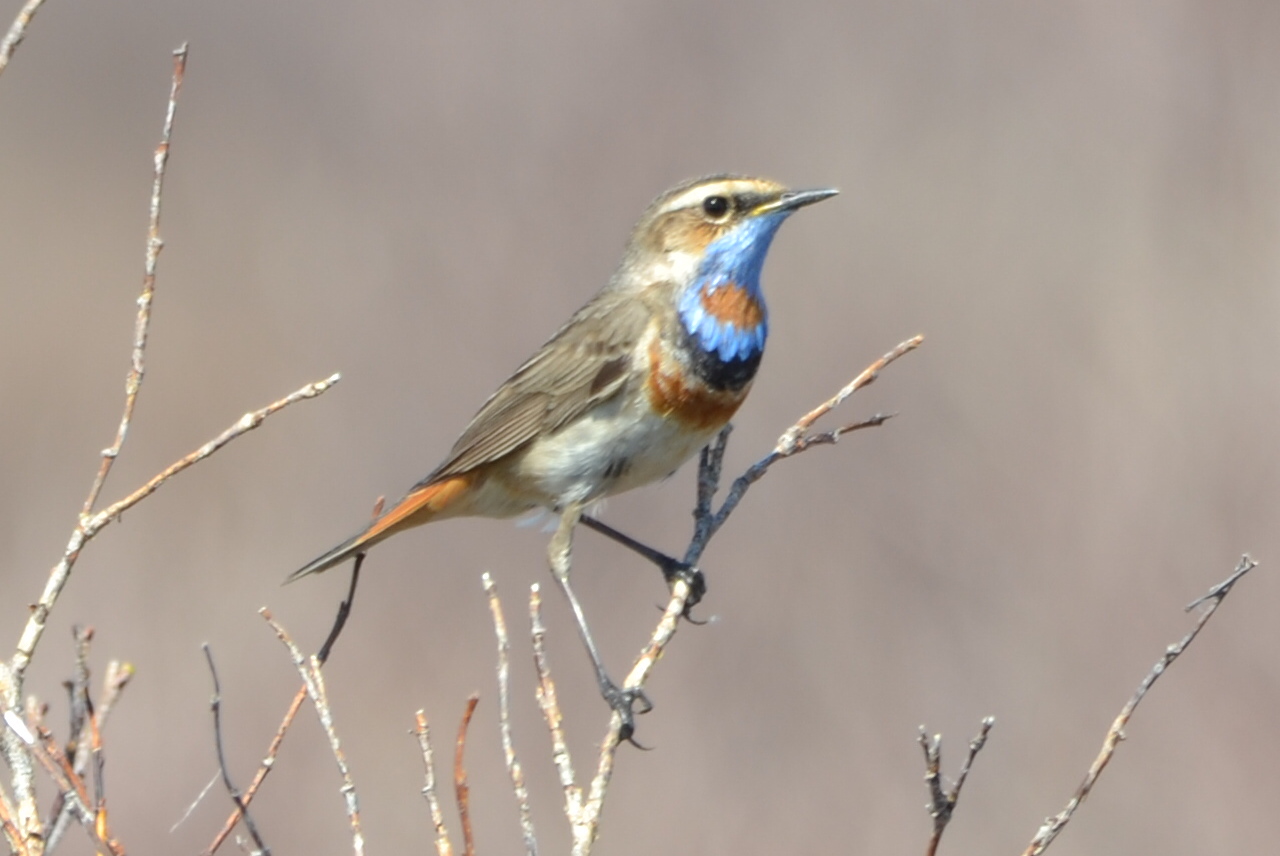
By the end of the day I had added the rare Bristle-thighed Curlew and Rock Ptarmigan to my life-list……currently standing at 668. If I maintained a mammal life-list, I would have added another rarity: Musk Oxen. My second and final day in Nome was spent attempting to photograph the GORGEOUS but very elusive Bluethroat. It is a small thrush that breeds in northwestern Alaska and Eurasia, and for me, is a signature bird for the high Arctic. I desperately wanted a photo good enough to print, frame and hang in our already over-represented aviary of a living room. After hours of trudging through marshy willow scrub bogs and playing I-phone recordings of a pretend competing male’s territorial song, I tricked one male for about 10 seconds. What do you think…an 8×10???

Specialty of the far north (Koukarag Road, Nome, Alaska)

BLUETHROAT: specialty of the high Arctic

Posted in Quest for 700 (*800!) | 11 Comments

Birding’s “Holy Grail” – GAMBELL, ALASKA!!

Serious North American birders absolutely have to witness spring migration in Alaska. Extreme “listers” will venture out to one of the islands with hopes of seeing North American birds which either migrate through or breed in the arctic and also, rare Eurasian migrants which occasionally drop into the island. I chose Gambell, the Siberian Yupik village on St. Lawrence Island in the Bering Sea, 35 miles off of the Siberian (yes, Russia) coast. Gambell is a small, timeless Eskimo village where walrus, whale, seal, polar bear, and birds account for most of the native diet. I was not disappointed, as I added a whopping 21 birds to my life list after five adrenaline-pumping 16 hour birding days on Gambell.

Looking over Bering Sea to Siberia, Russia

Looking from “sea-watch” over Bering Sea to Siberia, Russia

Gambell offers huge colonies of Parakeet, Least and Crested Auklets (all lifers for me) on the cliffs and the point or “sea-watch” provides a super-highway for passing seabirds, literally hundreds per minute, flying very close to the island. But Gambell is most famous among birders for “The Boneyard” and the rarities that are discovered in its craters. The boneyards are the native dumps used for centuries to dispose of whale, walrus, and seal carcasses. The natives dig in the boneyards, looking for “old” ivory which is quite valuable. Passing birds drop into “The Boneyard” for both respite from difficult travels and nourishment from the bugs attracted to the decaying animals. Water-proof, knee-length footwear was mandatory!

Birding "The Boneyard"

Birding “The Boneyard”

Rustic Bunting in "The Boneyard"! mega-rarity in North America (Eurasian species)
Rustic Bunting in “The Boneyard”! mega-rarity in North America (Eurasian species)

Posted in Quest for 700 (*800!) | 5 Comments

SE Arizona: Owls, Hummingbirds & a (?) Tanager

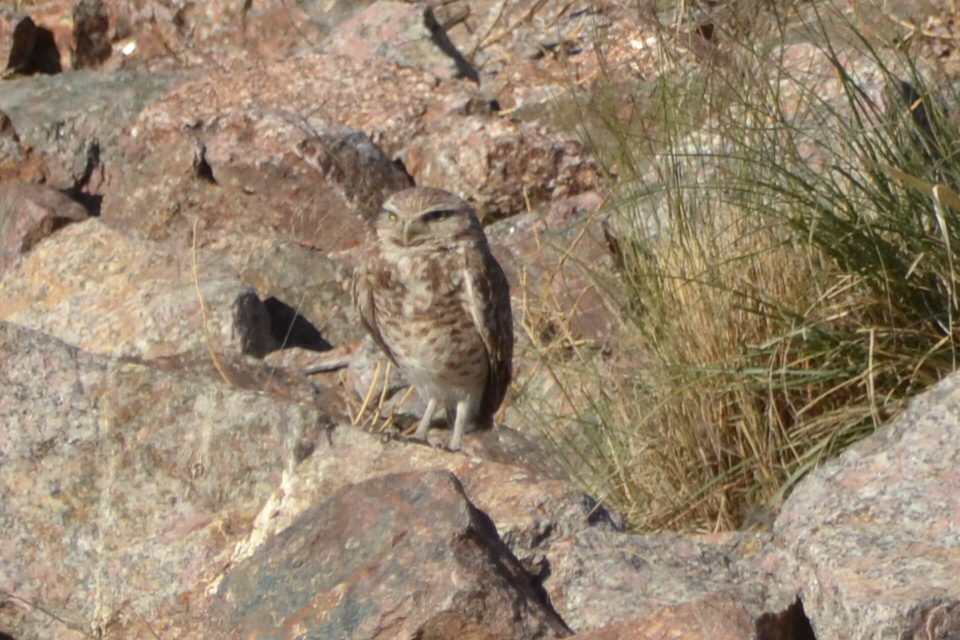
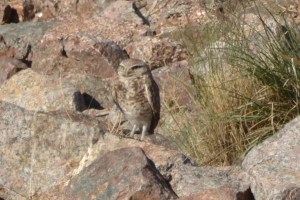
Burrowing Owl - Tucson, Arizona

Burrowing Owl – Tucson, Arizona

Anna's hummingbird: common Arizona resident

Anna’s Hummingbird: common Arizona resident

Southeastern Arizona is the premier destination in North America to search for owls and hummingbirds. The mesquite-lined washes in the seemingly endless desert around Tucson are dramatically framed in the distance by the Huachuca and Chiricahua mountains to the south and east. These mountains, with some peaks exceeding 8,000 feet, contain riparian woodlands and pine/oak & spruce/fir forests….which translates into a huge variety of BIRDS! This past weekend I joined Dave Stejskal’s Field Guides Tour with hopes of adding a couple of lifers and photographing some amazing birds along the way. But the fact that I saw 160 species of birds and added one lifer (Plumbeous Vireo) in three days is NOT the subject of this posting. Rather, it is an admission of an amateur birder’s embarrassing moment.

I was bringing up the rear of our nine person group as we descended Miller Canyon deep in the Chiricahua mountains. Dave was 100 yards ahead of me and had already stopped and listened to the forest noises at the spot where I heard something interesting…..a call that sounded like “pit-er-ick“. A quick processing of my limited selection of cerebral birding i-tunes could only come up with “tanager”. It sounded like our Scarlet Tanager, but one has probably never been seen west of the Mississippi river. There are several western tanager species likely to be seen in this area and we had already ticked the completely dark-red Hepatic Tanager on our lists. Western Tanager, a common but brilliantly colored (black, yellow and red) beauty, was on my mind. So I hung back and searched the dense foliage for the source of this repeating call.

Since Dave had already moved ahead, and he pretty much identifies everything he sees and hears, I pre-judged that whatever I found was not likely to be new for the group. Just then I spotted the orange head of the bird. Orange, like an oriole. I had about three seconds of viewing but quite honestly, I hadn’t done my homework and thought that it probably was just another one of the relatively common orioles we had already seen. Within five minutes or so, I caught up to the group and Dave asked me what I had seen.

“Oh, it sounded like a tanager but looked like an oriole, it had an orange head”, I casually replied. “An ORANGE head?! Are you sure?” he asked quite emphatically. “No question”, I replied with confidence and a growing sense that maybe I had been too cavalier about this exchange. “The Flame-colored Tanager has an ORANGE head!!”, Dave pronounced with bulging eyes. Uh-oh. The Flame-colored Tanager is a Mexican mega-rarity….seen maybe once a year in Arizona. Before I could move or respond, his six foot four inch frame marched back up the trail. After an unsuccessful attempt to re-locate my “oriole”, we walked in silence back to the trail head. I felt badly. I had missed a chance to identify something really special…..AND please our leader. I honestly would have traded several lifers for another crack at this bird.

Again, I hung back from the group. This time out of some embarrassment and shame…. certainly not because I was interested in announcing a sighting the people in the front might have missed. I came around a bend and immediately knew the group was on to something “good”. I put my new 10×42 Swarovski (Varsity, remember?) binocs up to the spot they were looking in a sycamore tree and imagine my sense of RELIEF and JOY when I saw my “oriole”!

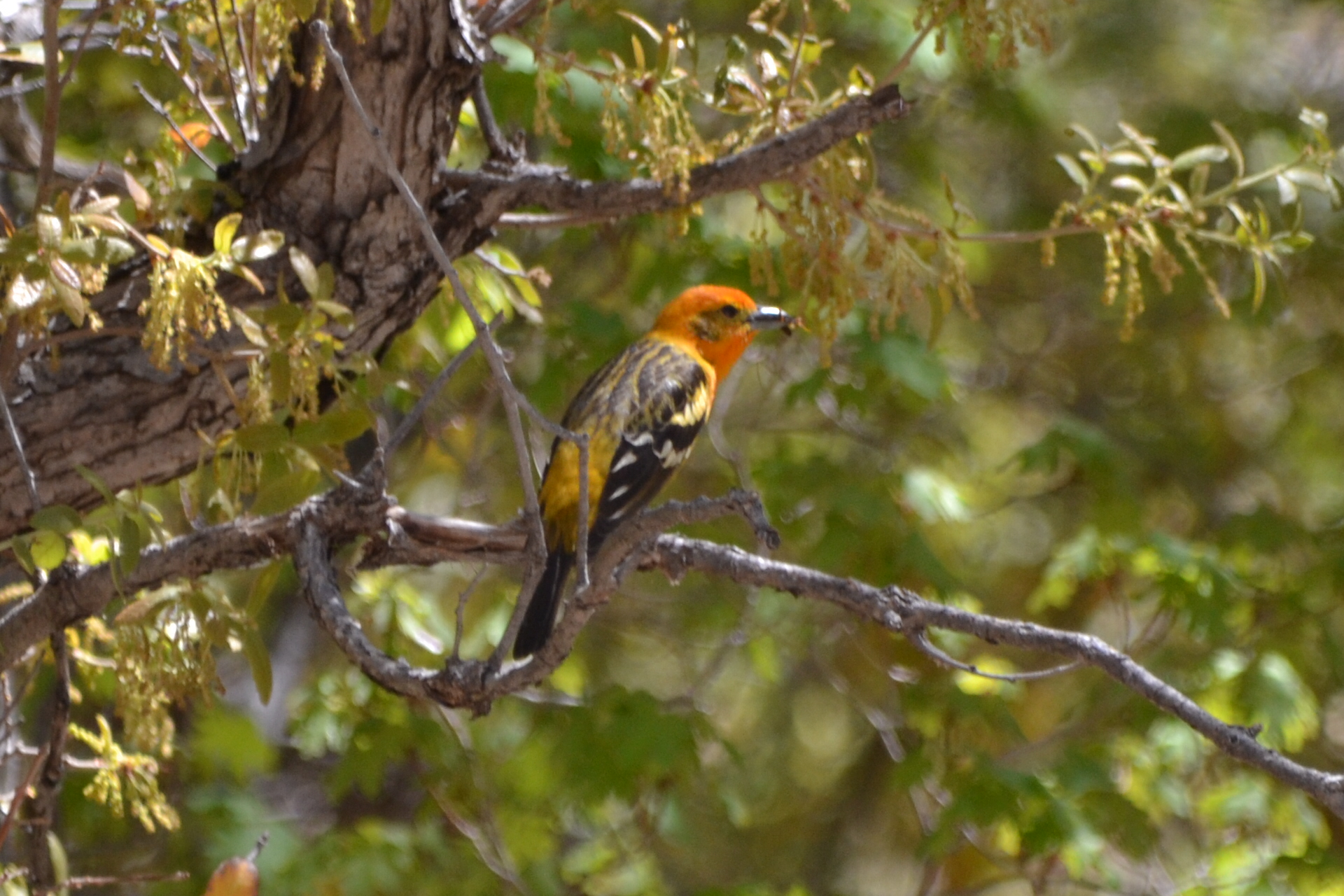
Flame-colored Tanager x Western Tanager (Hybrid)

Likely Flame-colored Tanager x Western Tanager (Hybrid)

Dave is the co-head of the Arizona Bird Records Committee. At the moment he believes this is a hybrid form (a rarity in itself) of the Flame-colored x Western tanager. Hybrids are not countable for the life-list…. but certainly worth a blog posting!

Posted in Quest for 700 (*800!) | 13 Comments

NOT to be denied…….#642!

Of course, I had to try for the Black-tailed Godwit again! It was seen Thursday (the day I missed it), Friday and yesterday. Sunday morning was wide open……. so off I went. Unfortunately, only a mile from the Chincoteague Refuge entrance, I was abruptly stopped by Mr. Adams of the Accomac County police force. “Good morning, sir. Yes, I was probably driving too fast in anticipation of seeing the rare bird in your refuge”. “You have a bird in the car? That is why I clocked you going 43 in a 25 mph zone?” he responded with a perplexed look and an emphasis on the latter half of that sentence. He didn’t get it.

a cost of bird "chasing"

a cost of bird “chasing”

Anyway, I shook off this minor setback and repressed the event. As soon as I reached the designated area where this shorebird had been seen recently, I noticed one “pretty big” bird about 400 yards out to my left, acting sandpiper-ish. I stopped the car, grabbed the binoculars, and viewing through the car window knew it was a godwit for sure….but was the bill straight – as in the rare Black-tailed Godwit? or slightly up-curved like its more common relative (Marbled Godwit)? I needed the scope. Moving quickly, I clumsily exited the car, grabbed the scope and positioned it across the road closer to the bird. YES, the bill appeared straight…..but I wanted a photo and my camera was still in the car. As I hustled back towards the car, the godwit flapped and began to fly! No chance for a decent picture. I needed 100% confirmation for myself (birders, like most golfers, live by an Honor Code) and the tell-tale, diagnostic marking would be the obvious presence of a black and white stripe on its flapping wings. My 3-day new Swarovski binoculars (note: I am no longer “Junior Varsity” as someone recently labeled my eight year old optics) confirmed Black-tailed Godwit! The photograph below shows where Lifer #642 was feeding (I swear!!)……before a Bald Eagle decided to claim the marsh as its territory.

Chincoteague NWR

Chincoteague NWR

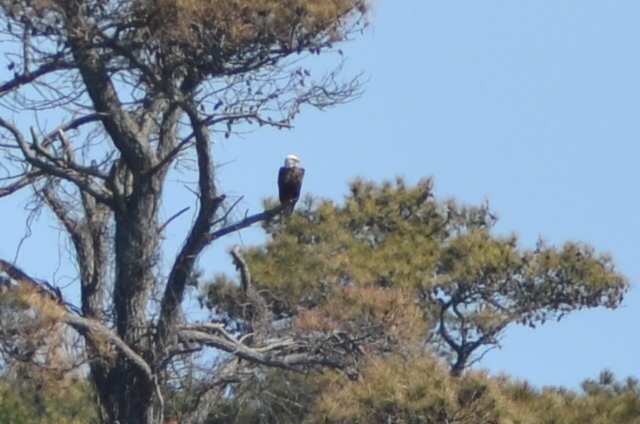
Zoomed in (Bald Eagle)

Zoomed in (Bald Eagle)

Posted in Quest for 700 (*800!) | 14 Comments

Black-tailed Godwit?…….DENIED!

For over three weeks a “code 3” vagrant (Black-tailed Godwit) has been seen every day at Chincoteague National Wildlife Refuge in Virginia. I simply could not remove this bird’s image from my obsessive-compulsive-disordered (?) brain, so I signed out for a vacation day and took off at 3am this morning,….. knowing I absolutely had to attend a Staff meeting at 2pm. I did write VIRGINIA, didn’t I? 200 miles one way. I traveled down the entire uninteresting spine of our first state (Delaware), passed through a portion of Maryland, I think, and hit the Refuge at sunrise. I also made it back to Haverford for my meeting. That left very little time to search for this pretty large, fairly conspicuous, shorebird. (And please don’t diss me about carbon footprint, etc….we are talking Black-tailed Godwit for crying out loud…. and I drive a Hybrid!).

Oh,…. the bird. I didn’t see it. Trying to make myself feel better, all day I kept thinking of the guy from Long Island who arrived at the same time as I did with his teenage son. He must not have slept at all last night. Misery loves company. Of course, they may have spotted this rarity after I departed, once the tide let out and exposed the mudflat feeding ground. Maybe I should have checked that small detail before I left. Ending on a posiitve note….enjoy the photos of some great sightings from last week’s Texas trip.

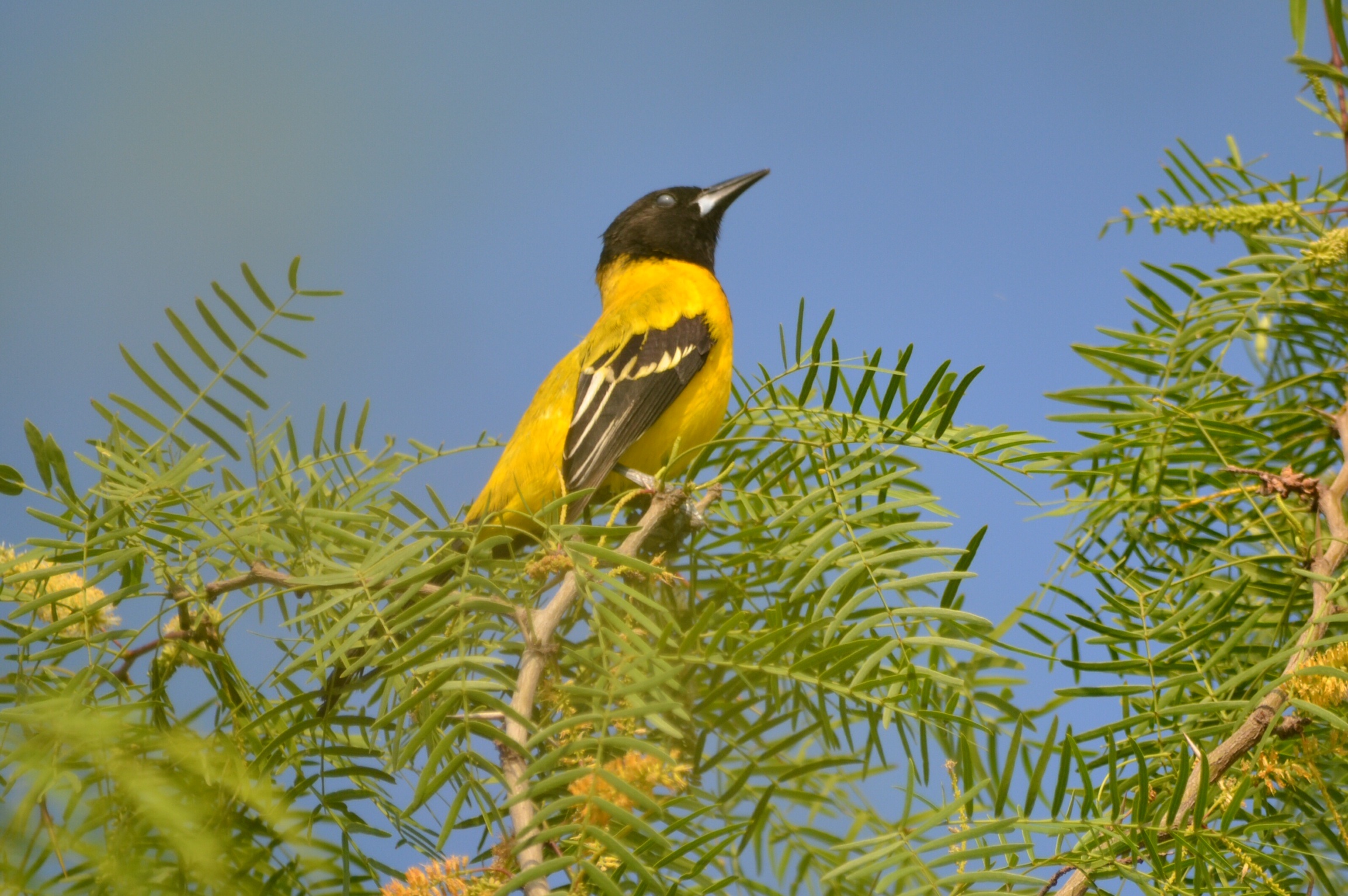
Altamira Oriole

Altamira Oriole

Roseate Spoonbill
Roseate Spoonbill

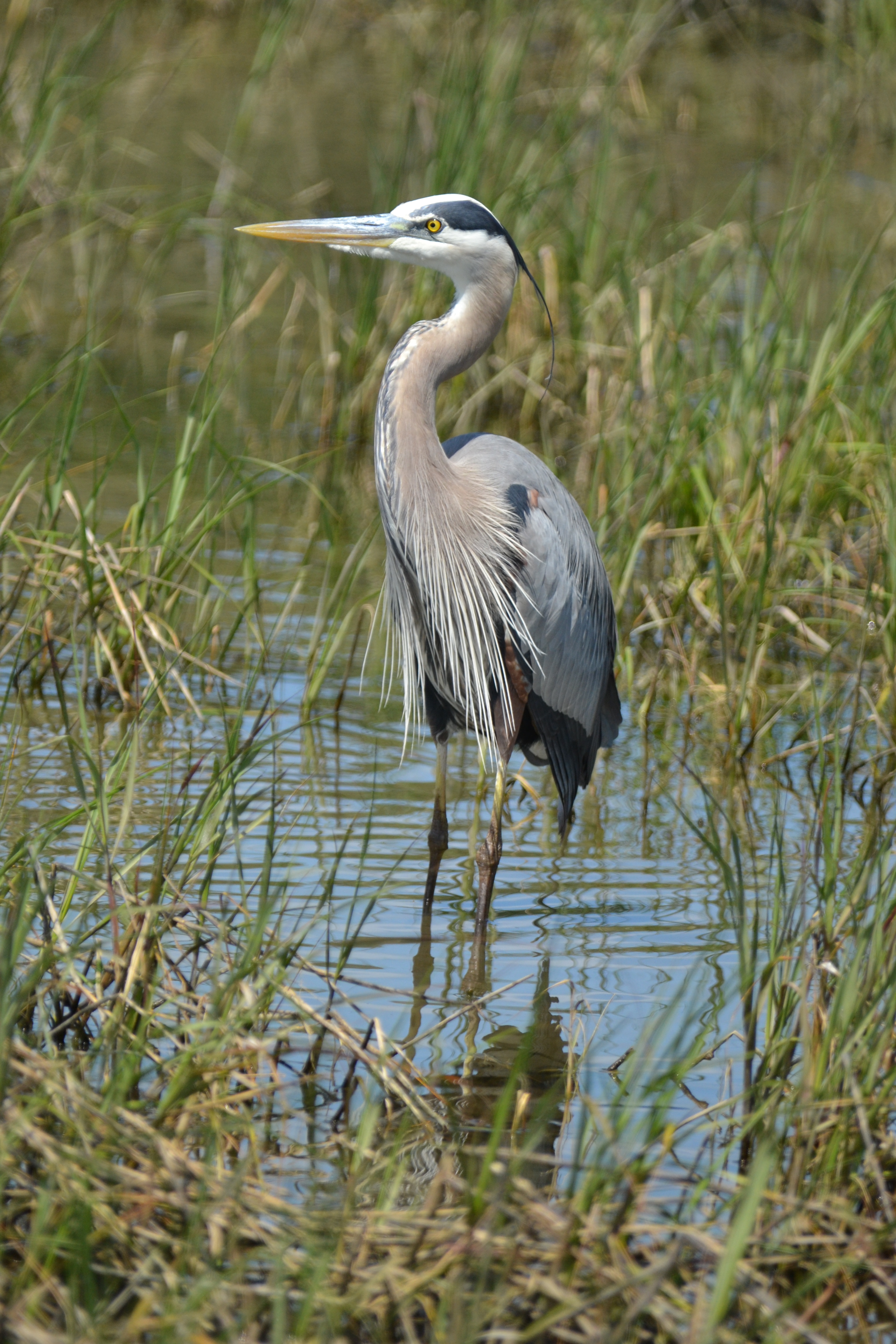
Great Blue Heron

Great Blue Heron

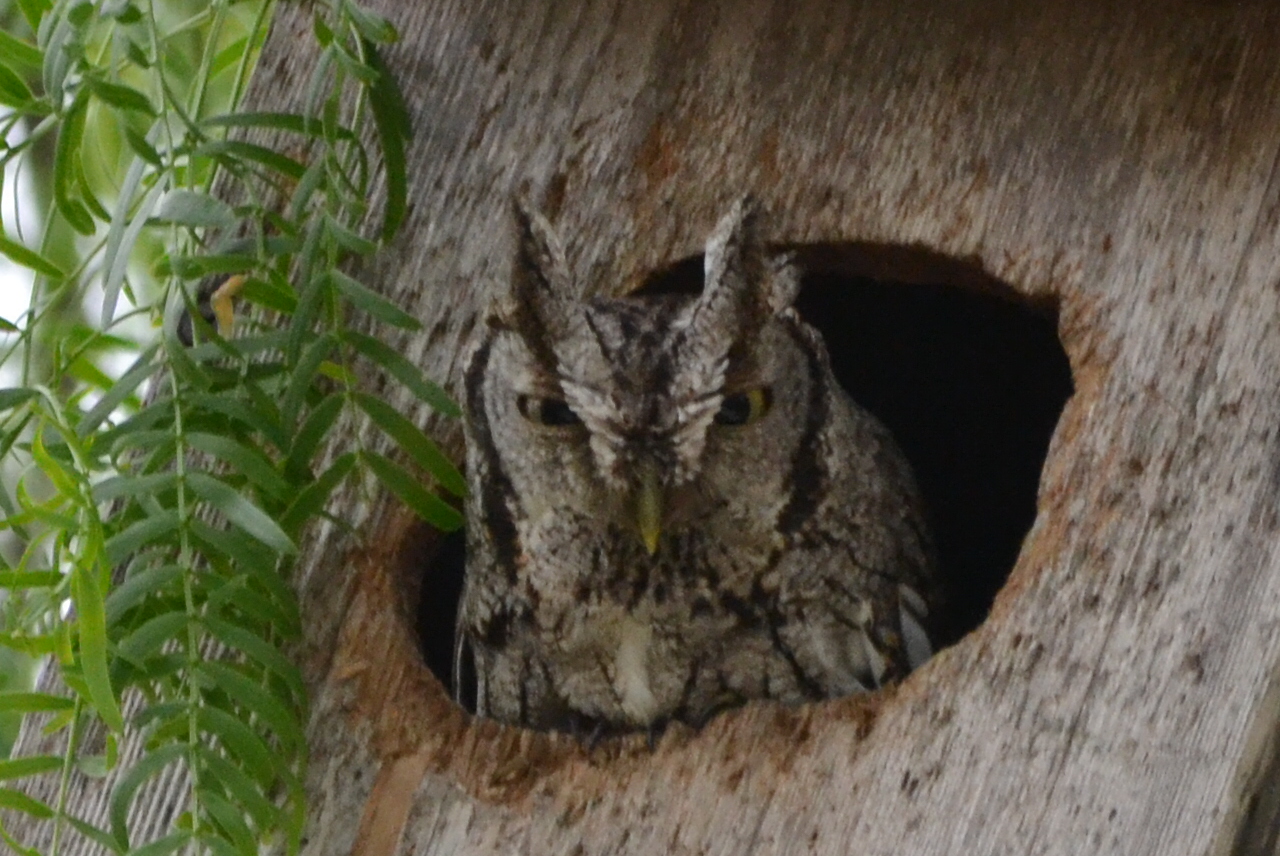
Eastern Screech Owl

Eastern Screech Owl


Posted in Quest for 700 (*800!) | 10 Comments

TEXAS SLAM….#638-641!!!!

Whooping CranesSpring Break afforded me the opportunity to “bird” (that IS an action verb) the southernmost portion of Texas. Starting with Aransas National Wildlife Refuge on the gulf coast….the winter home of the 300 or so wild Whooping Cranes left on earth….., we traveled down to the tip of Texas (literally the Brownsville municipal dump) and then up the Rio Grande a couple hundred miles. A week of birding across 1,200 miles of Texas vastness, in a van with eight other bird enthusiasts, produced 203 different species and four (4) lifers for me. Not to mention some memorable human interest stories which will have to be a topic for another blog.

The point of THIS blog is to document my quest for seeing 700 North American bird species in my lifetime…punctuated with humor, when possible. My number one target bird for this trip, the one that tipped the balance in my favor when conducting a pre-registration “cost-benefit” analysis, was not seen. Ferruginous Pygmy-Owl will continue to be a nemesis bird for me. I am oh-for-three lifetime looking for this fierce little daytime hunter.

However, a second day sighting of the rare Aplomado Falcon, followed by a Clay-colored Thrush at the Sabel Palm Sanctuary feeder the next day gave me the excuse to sample the local beer on the third evening and toast myself. None of the others imbibed so I limited my intake to dos cervezas. The tiny Northern Beardless-Tyrannulet has been one of my favorite names in the birdbook since I can remember. Our keen leader (Chris Benesh of Field Guides) picked up its call at Santa Ana National Wildlife Refuge and within minutes I had viewed (but not photographed) this small, innocuous, never-remain-still, grayish-olive flycatcher.

I must mention the skill of our leader. While viewing a collared peccary (also known as a javelina) in his scope, Chris somehow called out a distant, approaching from behind, Gray Hawk. Not a lifer for me, but a real crowd-pleasing rarity and a reminder that I am merely an amateur birder. I never would have picked up this sighting, especially with my mind fixated on the strange mammal grazing in front of us.

The final new bird for me, an Audubon’s Oriole, is a striking yellow and black bird…..only found in southern Texas. Not common at all, it took some work playing tapes and listening for a whistle note. My new friend “Dr. Jack”, a young Thailand citizen currently on an infectious disease medical fellowship in Houston, whispered over to me and pointed upwards. Bingo! Audubon's Oriole

Posted in Quest for 700 (*800!) | 10 Comments

PINK-FOOTED GOOSE – revisited (#600!)

Pink-Footed GooseI have always kept a North American “life-list” but balancing a career and family slowed  down my birding in the 1990’s and 2000’s. Additionally, I lived in England for six of those years. My kids encouraged me to focus on my “600 goal” so I picked up the pace in 2011. A weekend pelagic trip off Half Moon Bay, California in August brought me to 595. The “North American Rare Bird Alert” (NARBA) network alerted me by e-mail of several Autumn specialties. Four spontaneous trips to see these individual rarities in Florida, Louisiana, New Jersey, and Massachusetts, increased my count to 599 in mid-November. Now my family and close friends demanded that number 600 be “really special”. But what bird should it be?

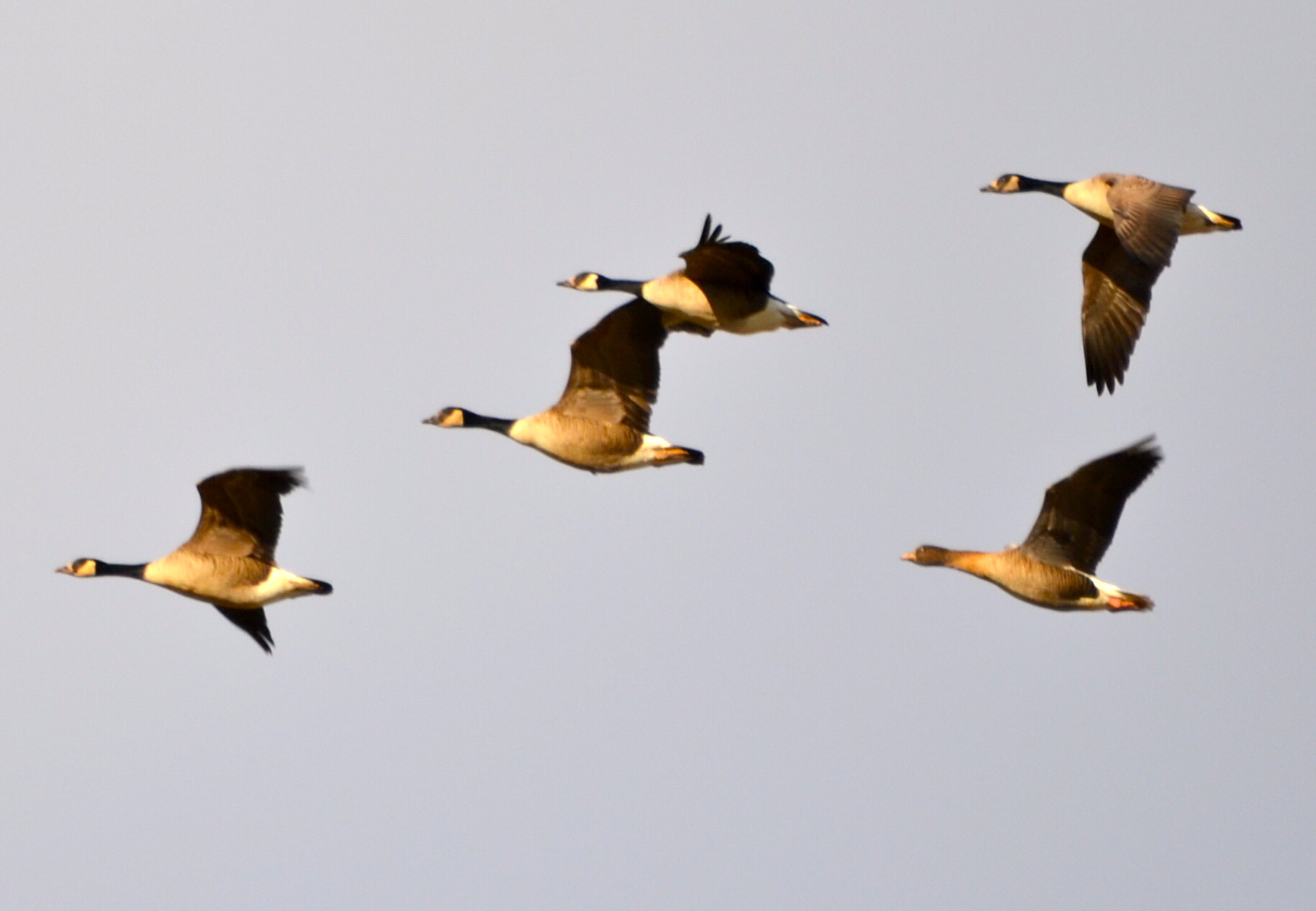
Coincidentally a birding movie (“The Big Year”) was released October 14th. At the end of the movie, actor Steve Martin tells actor Jack Black that the very rare Pink-footed Goose has been spotted “by his friend JEFF SHAW”. MY great friend since kindergarten at Haverford is Jeff Shaw! The answer was obvious to the Shaw’s who had seen this movie……#600 had to be the Pink-footed Goose. But this bird does not frequent North America every year. While sitting with Jeff and his family at the Princeton-Yale football game, I googled “pink-footed goose, 2011, north america” and astonishingly, one of these birds had been frequenting a Nova Scotia farm with thousands of Canada Geese.

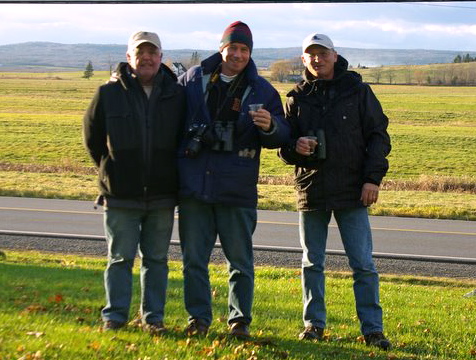
I could not leave town for five days….but thankfully on November 18th, I flew to Halifax and friendly knowledgeable local birders (John Robertson and Dave Currie) helped me locate this “code 4” vagrant. It was feeding on soybeans a mile away but one time it flew overhead..and I nailed it with my camera. A champagne toast followed!Dave, John, GCW GOOSE!

Posted in Quest for 700 (*800!) | 2 Comments