WEISBIRDING TEXAS!

Nina’s birding brothers (Dano and Joe – the “Weisbirds”) and I planned a Galveston, Texas trip with hopes of capitalizing on spring migrants. Three days of intensive birding and camaraderie produced many great moments including “lifers” for Dano (31) and Joe (21). I didn’t expect any new species for my ABA Area (USA & Canada) list – especially as I had gone “ofer” in 2024.

However, the birding Gods were smiling on us. A code 5 Yellow-headed Caracara (Central American raptor) and a code 4 first-ever-in-the-Lower 48 Amur Stonechat (Asian flycatcher) were reported the week before our trip. Okay, I had never even heard of an Amur Stonechat. Google Amur. And Stonechat for that matter:).

We scored the Caracara on our second dawn attempt. It gave us a distant look on a faraway topless Palmetto Palm trunk after flying over from the Gulf of America (?). Birders from Wisconsin joined in our celebration with fist-pumps.

YELLOW-HEADED CARACARA (photo courtesy of Joe Weisbord – the bird was 1/2 mile away)

The Stonechat required advance planning and pre-registration. Originally spotted on a December, 2024 Christmas Bird Count (CBC), this diminutive female took up residence on a small patch of a remote hunting ground. It took several months of deliberations before the ”Friends of Anahuac Refuge” obtained a permit from the State of Texas to allow birders access to this site. After a mile walk along the dike, we located and viewed this mega-rarity. Admittedly, not very satisfying looks, but for me, ABA Area #820 was in the books.

AMUR STONECHAT (photo courtesy of Jordan Juzdowski – the bird was 200 yards away)

During the Stonechat walk, I met an intense Coloradian named Nick who had completed a “Big Year” in 2023. He recorded 796 species in the ABA Area that year! Amazingly (to me), he had read my book!! When I thanked him for the $4 I receive from every Amazon sale, he deadpanned: “I bought it used”.

The Weisbirds and I re-started an annual birding tradition that originated before Covid in Massachusetts. Next year we will add nephew Carson and tackle the Texas Rio Grande Valley. I cannot wait!

Posted in Quest for 700 (*800!) | Tagged , , , , | 8 Comments

TEXAS “GUT PUNCH”

Generally I report successful bird chases on this blog. Not tonight. But I believe it is worth chronicling a failed trip because it does help me (you?) savor the wins.

When I went an unprecedented 5/5 in South Texas in December, I was guided by Evan Farese. Small world…with the help of loyal blog-follower Anne Parish, we determined Anne and Nina knew him as a little boy in SF! Anyway, UT-Rio Grande Valley grad student – Evan, found a “code 4” Fan-tailed Warbler in mid-January on campus. The rare bird alerts were immediate.

After weeks of reading fairly regular reports on e-Bird of this six-inch skulker, I pulled the trigger and used the last of OUR American frequent flier miles. Spring break started yesterday so I didn’t even burn a vacation day:).

This gray-backed, yellow-chested ground dweller has been frequenting a couple hundred yard dense thicket adjacent to a resaca. It vocalizes infrequently and pops into view even less so. The area from which one has even a remote chance to see it is very small, sloped and uncomfortable to sit or stand. At least there weren’t any biting insects.

Why was I drawn to catch a 5am flight from Philly-Dallas-Harlingen, knowing I was going to stand/sit for hours (six yesterday and six more today) and only hope to view this thing? I’m still asking myself that question on this Saturday night flight home. But two guys from Tampa and a carload of Ohio BIRD-MAD teenagers are probably asking themselves the same question.

I suppose the answer is that the thrill of the chase – or in this case, wait – is as adrenaline-pumping as the catch itself. Or at least close enough to try. Trying is the message here. You miss 100% of the shots you do not attempt.

Posted in Quest for 700 (*800!) | 12 Comments

TEXAS hosts a 1st in USA…..but will it “count”?

I had never heard of a Cattle Tyrant. But when one showed up in the urban center of the large shipping port of Corpus Christi last month, the rare bird alerts were activated! This yellow-bellied flycatcher is native to South America. In fact, one has NEVER been reported north of Panama.

https://www.smithsonianmag.com/smart-news/south-american-bird-makes-rare-appearance-in-texas-thousands-of-miles-from-home-180983373/

Just in case the birding authorities allow us “listers” to count it as a wild bird (it’s very unlikely to be an escaped pet), I decided to make the two-hour drive from Harlingen. I parked the car at the designated area reported on e-Bird and walked across the busy downtown street. A friendly woman with a large telephoto lens pointed up to one of the trees on the corner. Crazy! There it was sitting quietly in a tangle of date palm fronds.

As indicated in the Smithsonian article above, the Texas bird records committee will likely rule this is as a case of ship assistance rather than a confused vagrant. And that means they won’t accept this media attention grabber on our county, state, or in my case – USA – lists. However, the American Birding Association (ABA) will also weigh in, so who knows.

Oh, that friendly woman; she was Yve Morrell. The person that shattered the BIG YEAR record (remember the movie) in 2017. I did not ask her opinion of the Cattle Tyrant’s provenance but I am curious what YOU think. SHOULD THE CATTLE TYRANT “COUNT”?

Posted in Quest for 700 (*800!) | 15 Comments

HAPPY HOLIDAYS!

The Birding Gods smiled on me this weekend! I succeeded in seeing an unprecedented three Code 5 and a Code 4 “lifer” birds in the Rio Grande Valley, Texas. Remember Code 5 is as rare as it gets. Code 6 is extinct! I had not seen a new USA bird since April but not for lack of trying. I was too late to pull the trigger and travel for two Arizona hummingbirds in August; I dipped on an Argentinian tern in Naples this fall; and just last week I missed the Green-breasted Mango in Louisiana while attending a work conference in The Big Easy. None of those stories were blog-worthy, although experiencing failure does make success taste better.

This trip started slowly as my professional guide (Evan Farese) and I walked eleven miles over eight hours in the Resaca de la Palma State Park in Brownsville…..and missed our two targets: Roadside Hawk (4) and Texas’s first ever Gray-collared Becard (5). Ten minutes after I left Resaca to drive to my evening destination……both birds were seen and reported on E-Bird.

BIRDING THE BORDER

(Santa Margarita Ranch)

I was fortunate to have made the cut for a limited access tour that evening in search of the Mottled Owl at the Santa Margarita Ranch – two hours north of Harlingen on the Rio Grande. Huge THANK YOU to guides Simon Kiacz and Zachary Johnson! This Code 5 Mexican owl vocalized often and even swooped and banked in front of the assembled group – alas no photos.

https://www.google.com/url?sa=t&rct=j&q=&esrc=s&source=web&cd=&ved=2ahUKEwiEjd-Ep5qDAxVfkmoFHWd8B7AQFnoECA4QAw&url=https%3A%2F%2Fwww.aba.org%2Frare-bird-alert-december-1-2023%2F%23%3A~%3Atext%3DTexas%2520stays%2520on%2520its%2520historic%2Cthe%2520current%2520bird%252C%2520in%25202006.&usg=AOvVaw3N77aQKPVw7bB4fjL3IS2a&opi=89978449

The next morning proved very fruitful as the 3rd Bare-throated Tiger Heron (Code 5) ever located in the USA continued to pose for photographers along the banks of the Rio Grande on the Santa Margarita Ranch.

BARE-THROATED TIGER HERON

(Rio Grande)

I decided to return to Resaca de la Palma State Park that afternoon as Evan had indicated the long-legged Roadside Hawk likes to hunt for grasshoppers in the dry bed at dusk. My efforts were rewarded!

ROADSIDE HAWK

(Brownsville)

Evan and I met the next morning at Resaca to try again for the shy Becard. This seven-inch, large-headed, flycatcher-like passerine was not vocalizing. A true needle-in-the-haystack situation. But within minutes of our arrival, a friendly couple from Ohio showed us the hackberry tree where this male played hide and seek.

GRAY-COLLARED BECARD

(Brownsville)

I have no idea why Texas has had this ridiculous run of rarities. Perhaps it’s climate change. Another possible explanation is the increased presence of many young, enthusiastic and talented birders who have an affiliation with the University of Texas – Rio Grande Valley (UTRGV). Whatever the case, my ABA Area life-list now stands at 815 and I cannot wait for the next chase. But first, time to watch Eagles and Seahawks:). HAPPY HOLIDAYS!

Posted in Quest for 700 (*800!) | 20 Comments

MIA WIN WIN!!

CONGRATULATIONS to my eldest (Sarah) for recently becoming engaged to Ben Yudysky! She is the person responsible for the creation of this blog over ten years ago. A trip to Miami to celebrate them was in order. Bonus for me – a code 5 Cuban/Central American Red-legged Honeycreeper that eluded me (twice) in Texas last Autumn, had just appeared last week, twenty minutes from their Brickell apartment. Presumably the Fall tropical storms sent a few of these individuals north to our Gulf states and this particular female had remained undiscovered through the winter.

American Airlines has a 6am non-stop flight to Miami that enabled me to start looking for this diminutive member of the tanager family by 10am on Good Friday. I anticipated another needle-in-the-haystack search. However, within minutes of my arrival, two friendly gentlemen appeared on the scene. They had driven 17 hours from Harrisburg to chase their target!

After only 90 minutes of birding Brewer Park, one of the fellows located a quiet bird in a leafless tree, basically in the same spot this specialty had been reported previously. HONEYCREEPER! She briefly preened and then moved across the street to probe the pods of a fig tree with her oversized bill. For fifteen minutes we three fired off dozens of digital photos.

This morning Ben suggested we look for the LaSagra’s Flycatcher on Key Biscayne. A code 4 that I had seen ten years ago but eluded him earlier in the week. Oh, I forgot to mention that Ben DID see the Red-Legged Honeycreeper a few days before my arrival. Was Sarah marrying someone in her Dad’s image? Maybe Ben only birds for MEGA-rarities? I’m sure our Family will have fun with this:).

HAPPY PASSOVER/EASTER!

Posted in Quest for 700 (*800!) | 18 Comments

BIRDING SE AZ

I am still smiling after picking up the code 4 Nutting’s Flycatcher – ABA lifer #811. As promised, here are a sampling of photographs of other birds seen in the canyons of Southeastern Arizona. Enjoy!

HEPATIC TANAGER Male
(Santa Rita Lodge, Madera Canyon, Arizona)
HEPATIC TANAGER Female
(Santa Rita Lodge, Madera Canyon, Arizona)
MEXICAN JAY (Santa Rita Lodge, Madera Canyon, Arizona)
LESSER GOLDFINCH
(Ramsey Canyon Inn, Hereford, Arizona)
BROAD-BILLED HUMMINGBIRD (Santa Rita Lodge, Madera Canyon, Arizona)
RIVOLI’S HUMMINGBIRD (Ramsey Canyon Inn, Hereford, Arizona)
RIVOLI’S HUMMINGBIRD
(Ramsey Canyon Inn, Hereford, Arizona)
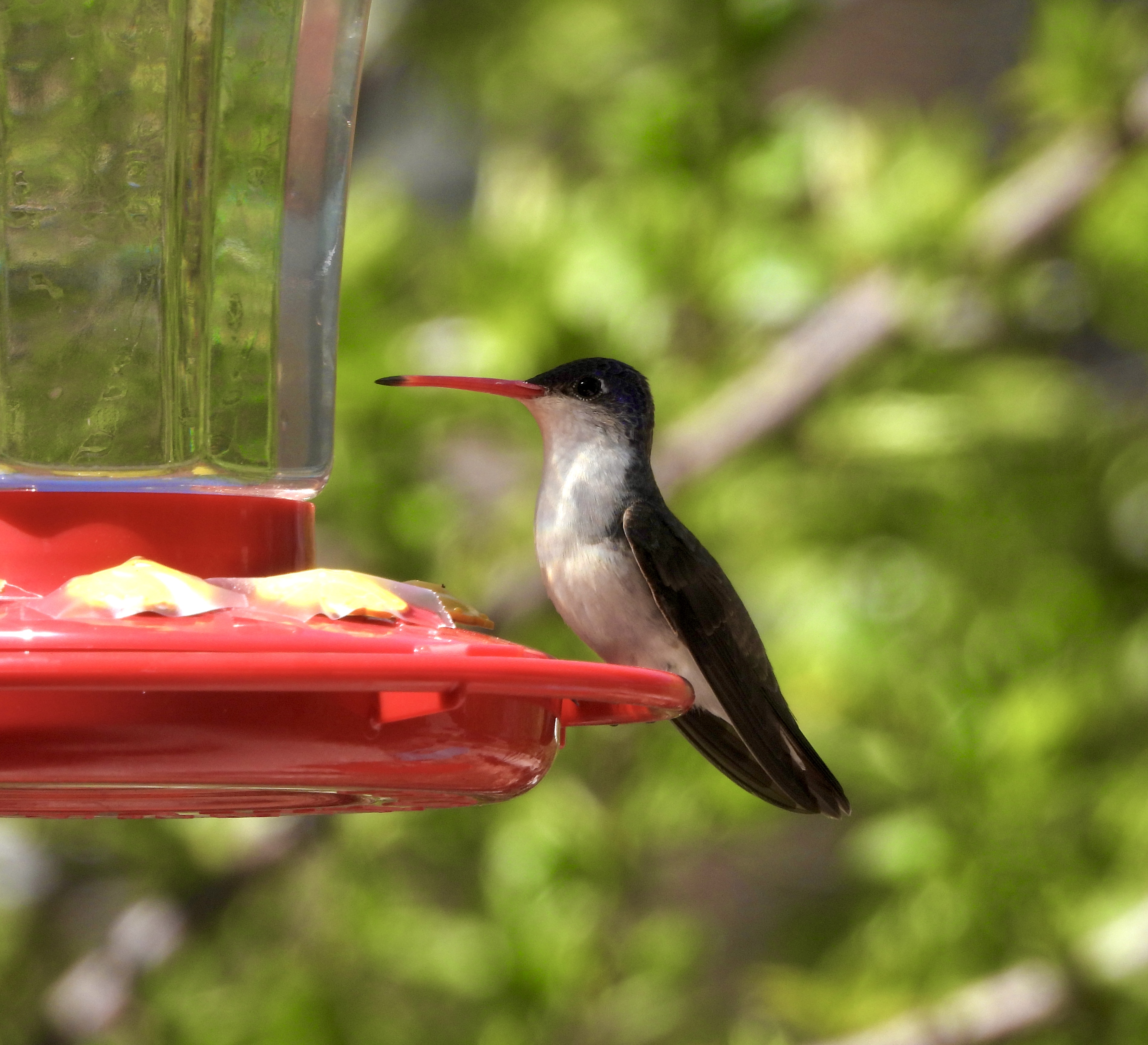
VIOLET-CROWNED HUMMINGBIRD
(Ramsey Canyon Inn, Hereford, Arizona)
PAINTED REDSTART (Paige Creek, Pima, Arizona)
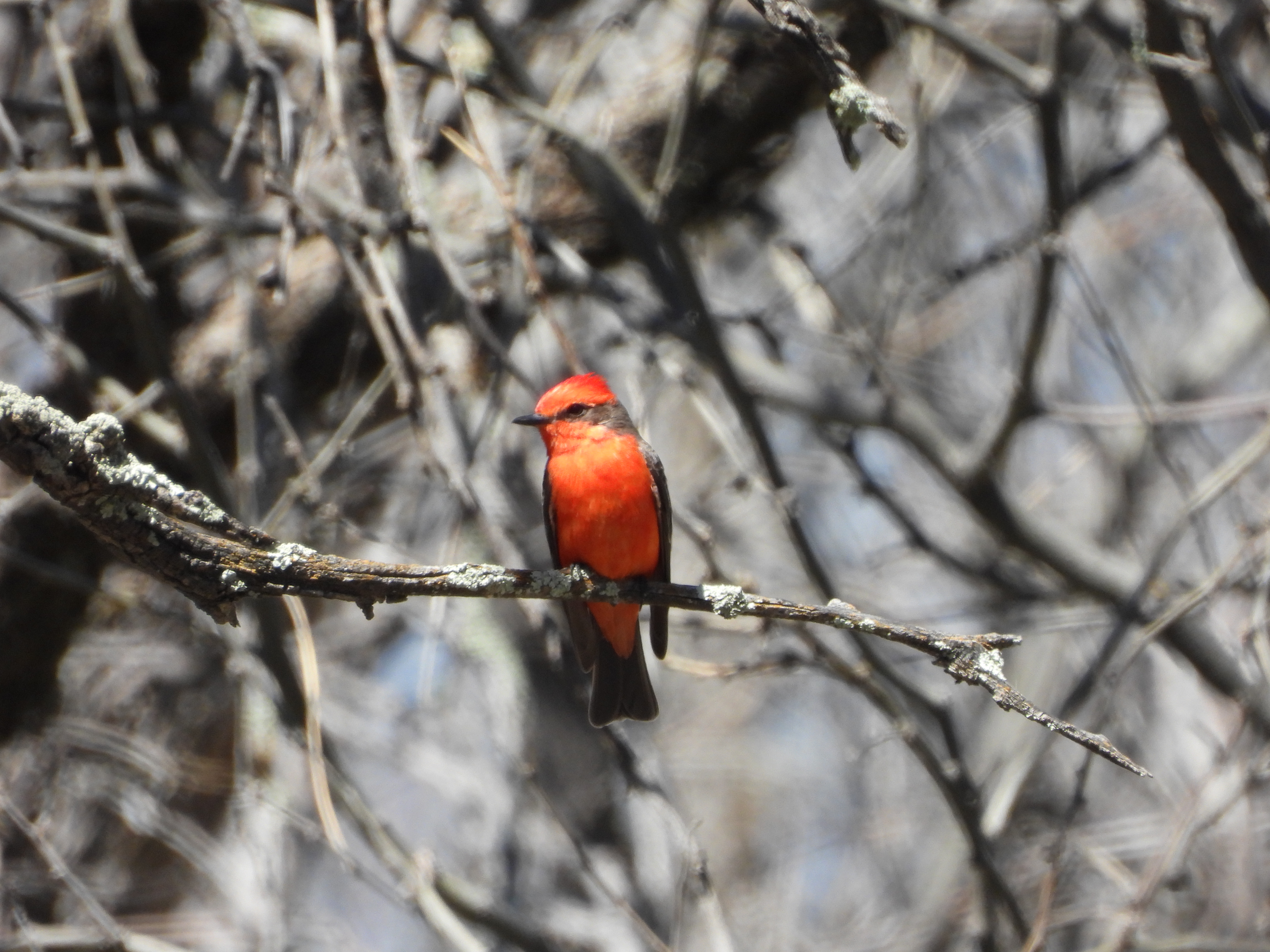
VERMILION FLYCATCHER (Paige Creek, Pima, Arizona)
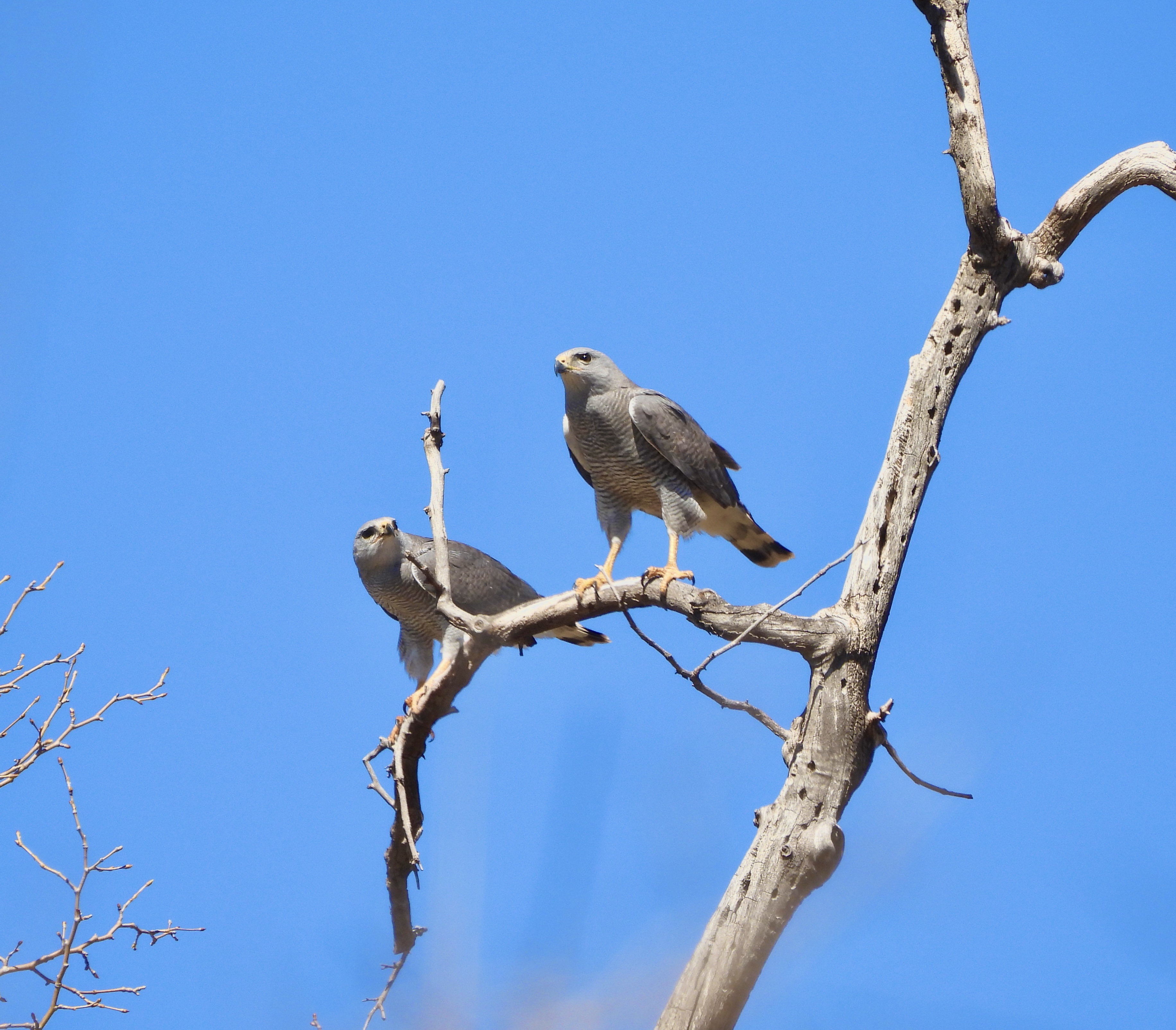
GRAY HAWKS (Paige Creek, Pima, Arizona)
Posted in Quest for 700 (*800!) | 22 Comments

NUTTING’S FLYCATCHER (SE Arizona)

I had no intention of traveling to Arizona until Nina mentioned she had a business trip to Phoenix. The timing coincided with my spring break so I decided to hit SE Arizona before joining her for the upcoming weekend. My objective was to obtain photographs of the wonderful birds that frequent the canyons in the mountains south of Tucson.

I was chasing colorful and common birds not rarities. Some of those photos will be an upcoming blogpost. BUT….the discovery of the code 4 NUTTING’S FLYCATCHER on Tuesday… in the same remote spot it was located last spring, altered my plans somewhat.

My bed & breakfast in the stunning Ramsey Canyon Preserve was only a 90 minute drive to the target bird. However, the last 17 miles are on unpaved roads in the Coronado National Forest, crossing no fewer than six flowing creeks. Fortunately, the Hertz “Manager’s Special” provided me with a sturdy SUV capable of handling these tough conditions.

No wonder I did not see another human for the next six hours! Unfortunately the bird didn’t appear or I simply missed it. This flycatcher vocalizes very infrequently, is somewhat skittish and at only 6-8 inches, not that conspicuous. I returned to Ramsey Canyon with some wonderful shots of common birds but no Nutting’s. Of course, I had to try again today.

I skipped the B & B’s delicious breakfast, and arrived at dawn, three hours earlier than yesterday. Surprisingly, two other cars were already parked by the area close to “the spot”. Two guides with eager clients in tow were already searching the sycamores, cottonwoods and creek beds for any sign of Mr. Nutting’s. Heavy winds kept things quiet and after four hours I was beginning to despair. But then I saw one of the guides (Nolan) in the distance move quickly towards a thicket. He kindly motioned to me across the creek. One of those urgent-like motions. Within thirty seconds, I waded a straight line across the creek and joined him and his elated client viewing the bird!

I discreetly handed Nolan a bill from my wallet and said: “Thank you. I don’t believe I would have found this guy by myself. Buy yourself lunch and a beer”. At first, Nolan politely refused my spontaneous gesture. I insisted. Then he sheepishly smiled at me and stated: “I’m only nineteen”.

Posted in Quest for 700 (*800!) | 25 Comments

PA Landfill hosts a (potential) CODE 5!

I have always been fascinated by landfills. In a previous life, I was the Operations Director of The Waste System Authority of Montgomery County (Pa). My responsibility was to license and regulate the municipal waste haulers and, in the interest of protecting the environment, make sure they disposed their trash loads in a properly lined, EPA-approved landfill or a (more expensive) waste-to-energy facility. My Ohio State master’s thesis (1995) was written about the future of Ohio’s county landfills and thus I visited every single one in that state.

Lucky for me, interesting birds can be found at landfills. My lifer (first) Mexican Crow was spotted at the Brownsville dump in Texas. Duluth, Minnesota’s landfill wasn’t my trip’s primary destination but it did produce a Snowy Owl along with some unusual gulls. On December 19th, 2022 a code 5 Common Shelduck was spotted in one of the pond’s on the Lebanon County (Pa) landfill’s property.

The Common Shelduck is common in the UK, Europe and Asia but NOT in the USA. It is a popular pet among American farmers so many sightings have been deemed “not countable” as domestic birds are not accepted on the American Birding Association (ABA) check list. However, recent studies have shown that breeding populations of this large, strong flyer are moving closer to Iceland and the eastern USA.

This particular bird is very skittish, lacks leg-bands and has perfect feathers. All signs pointing towards being a WILD individual. This potential mega-rarity was still present on January 2 and sat only 86 miles from Haverford. Serious “FOMO” (fear of missing out) was setting in last night so I decided to drive west this morning…..twelve hours after arriving home from a two week respite in Vermont.

The landfill operators have entertained hundreds of curious/anxious birders since December 19th. They conveniently placed orange cones on the road marking the spot to park. Then they constructed a bridge across a creek to an aerated pond where this goose-like duck was an easy spot among several mallards.

COMMON SHELDUCK (Lebanon, PA)

Stay tuned but I have a feeling this is ABA Area #810 for me. Happy 2023!!

Posted in Quest for 700 (*800!) | 28 Comments

YELLOW RAIL & RICE FESTIVAL

The best chance one has to see and possibly photograph the very elusive yellow rail, a small chicken-like bird, is to attend the Yellow Rail & Rice Festival in Lafayette, Louisiana. The yellow rail breeds in northern Canada and spends the winter in our Gulf Coast marshes. Louisiana is our second-largest rice-producing state and the second harvest of the year, also known as ratoon, occurs in Autumn. This amazing example of cooperation between rice farmers and birdwatchers has been an annual late October event for over a decade.

I decided to trek to southwestern Louisiana to witness this spectacle. I was joined by my intrepid friend, Joe Knowles, who tallied the mega-rare Steller’s Sea-Eagle with me in Maine on New Year’s Day. Joe had worked in Lafayette in the early 1980’s and he couldn’t resist the opportunity to revisit the heart of Cajun & Creole country.

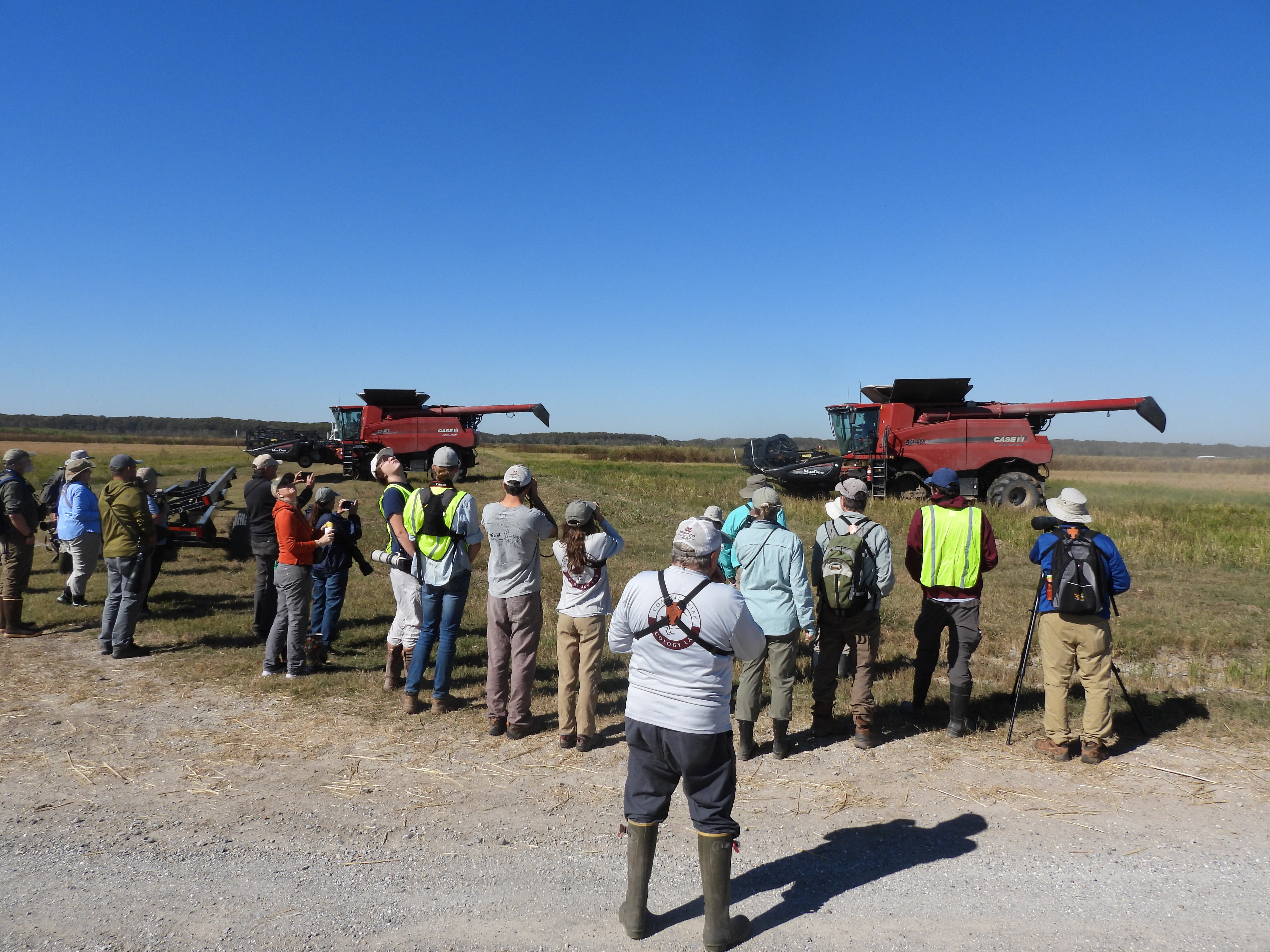
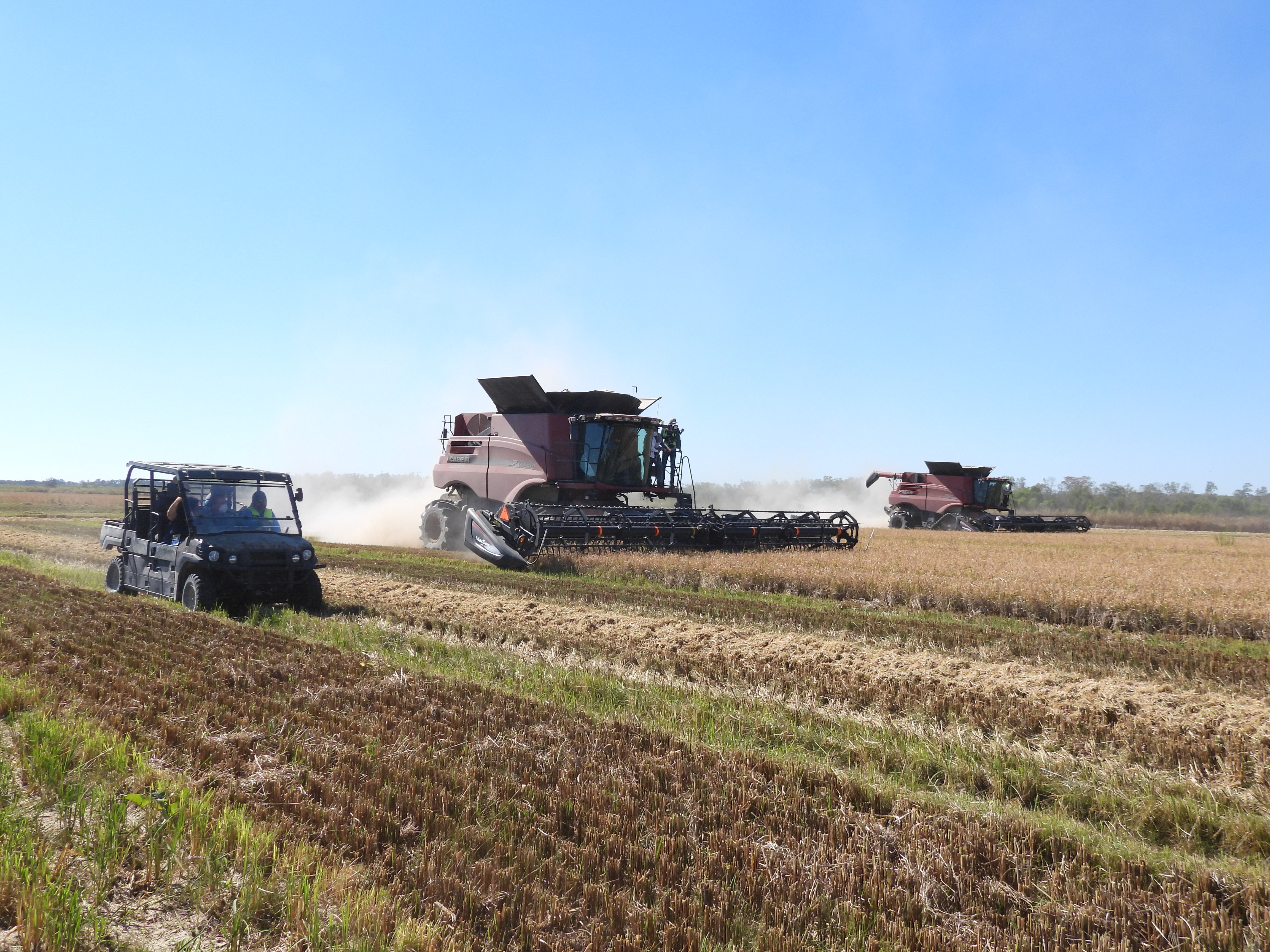
As the farmers drive their combines through the rice fields, birders watch for wildlife – generally rails – which are harmlessly flushed from their hunkered down positions by the loud noise of these huge machines. The birders have an option to sit in the cab, ride alongside the combines in ATV’s, or walk quickly alongside the vehicles paralleling their path. Safety is of utmost importance so many green-vested volunteers shepherd the eager birders and keep them a safe distance from the equipment.

After about an hour, most of the festival’s 75 participants had viewed at least one weak-flying yellow rail. Their large white wing patches are very visible in flight and immediately distinguish them from the other more common rail species that also frequent the fields. But the rails fly a very short distance before settling down beneath the level of the crop. How would I obtain a decent photograph?

Thankfully a group of bird-banders had joined the party and set up their mist nets in one corner of the property. One yellow rail was captured, albeit very briefly, for ornithological research purposes.

Of course, I was pleased to record ABA (USA & Canada) area # 809. But even more enjoyable was witnessing Joe tabulate this rarity to go along with his code 5 Eurasian eagle. Baseball analogy – his lifelist’s “slugging average” is reminiscent of Bryce Harper’s monster play-off performance.

GO PHILLIES!

Posted in Quest for 700 (*800!) | 6 Comments

Bird Tales: A Lifetime Pursuit

Dear loyal blog followers, I am pleased to inform you that my “bird book” was published yesterday and is available for purchase on Amazon. This 120 page manuscript is basically autobiographical and ties many of my blog posts together chronologically. In short, it captures my quest to see as many birds as possible in the ABA Area (USA & Canada). I hope you choose to order it ($29.95 hardcover) – I profit a whopping $4 for each sale:), read it and send me your comments.

THANK YOU for helping to motivate me to reach (and surpass!) my goal of seeing 800 bird species in my lifetime, as well as documenting this marathon effort in print. The front and back covers are pictured below.

Sincerely, George

Posted in Quest for 700 (*800!) | 15 Comments